


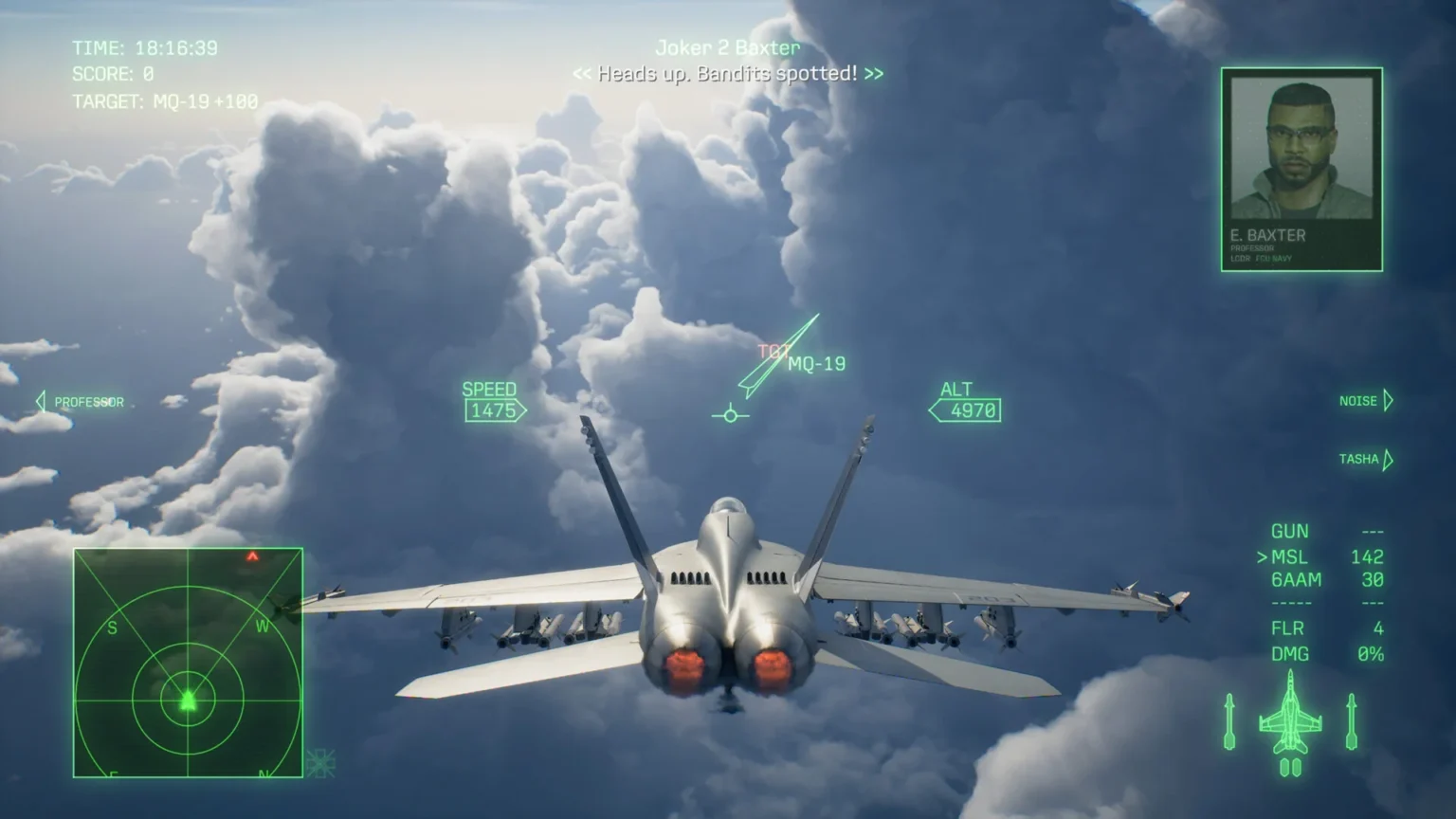

Learning new moves in any game puts you miles above the rest of the players, as most struggle with learning the basic ones. Advanced moves are intimidating, but once you learn any of them, the game quickly opens up for different experimentation. PSM, or Post-Stall Maneuver, is one of the most difficult and amazing maneuvers in Ace Combat 8; you will need to meet specific requirements before even thinking about pulling it in the air.
Here, you also run into other obstacles of aircraft compatibility; not all aircraft are compatible with the PSM maneuver. It’s for specific sets of aircraft vehicles, and there is also a quick workaround that can help us bypass the rule. If you have no idea how to perform PSM and want to master the skill, then you are in the right place. In this guide, I will go through the PSM maneuver in Ace Combat 8, helping you learn how to use it in the air and tips to help you perform maneuvers efficiently in the game.
What is a Post-Stall Maneuver, or PSM?
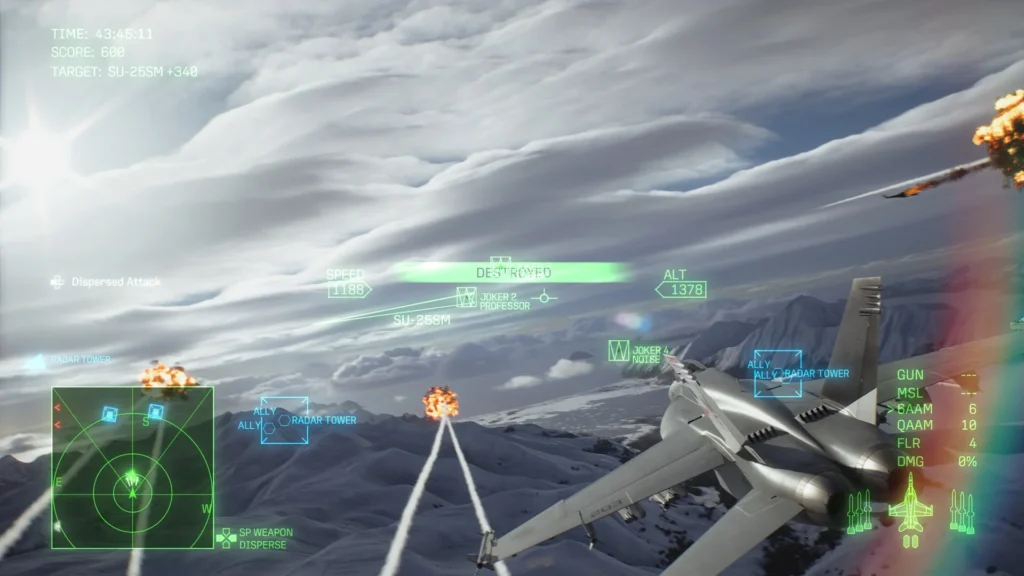
Performing a Post-Stall Maneuver, or PSM, allows your aircraft to do extreme flips, turns, and rolls as a great movement strategy. The coolness of the move is just one factor; it allows you to pull off a flat spinning move and make adjustments to your nose direction in the air. Another key part of PSM, it allows you to affect your missile behavior, instead of firing in a straight line, firing while PSM makes the missile run at a curved angle. If you want to angle your attack better against the enemy, then you need to add the move to your arsenal. There are a few specifics you must know to pull a PSM in the air.
- Lower the Speed under 500: You need the speed of your aircraft to be below 500Km/hr. You won’t be able to pull a PSM above the speed of 500. If you are above the speed of 500, press the deceleration button to bring the speed down to under 500. Keep the speed between 0 and 499; the sweet spot would be at 450.
- PSM: Now press the Acceleration and Deceleration buttons at the same time while pressing Pitch Up. This will cause the aircraft to move forward with the nose pointing to the sky.
- Control Console: L2 + R2 + Analog Down
- Control PC: Ctrl + Space + S Key
Depending on the aircraft, you might see a Kulbit maneuver or Cobra maneuver. Both are part of PSM maneuvers; some aircraft can only perform Cobra, while others are compatible with Kulbit. If you are using an aircraft that only supports Cobra, performing a PSM will execute the PSM Cobra maneuver; the same goes for the aircraft compatible with Kulbit.
Cobra Vs. Kulbit
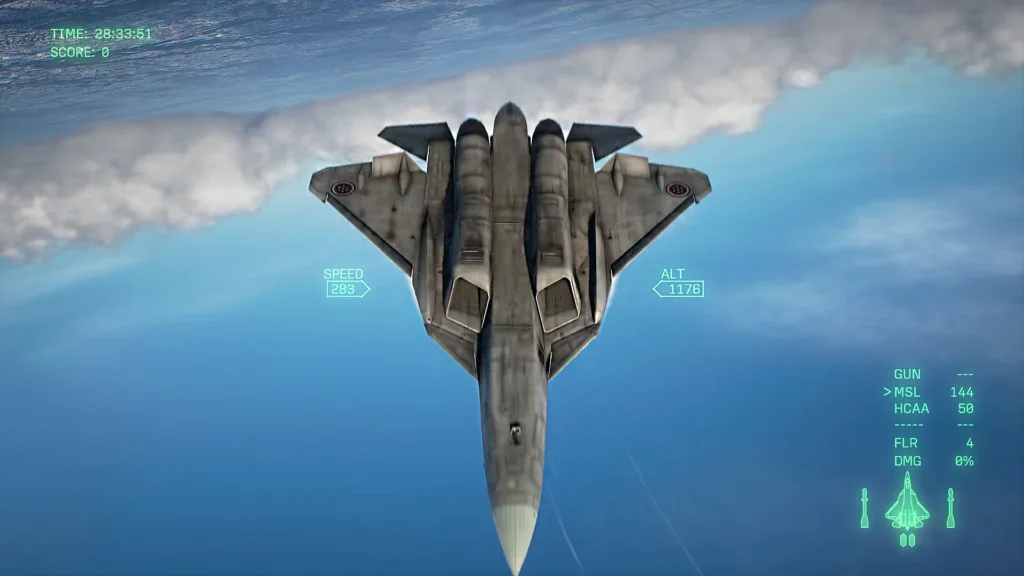
Not all aircraft can perform the PSM or Post-Stall Maneuver; you will need to know which aircraft are proper for doing a PSM. This section is about learning the subtle differences between Cobra and Kulbit PSM maneuvers and the list of compatible ships.
Cobra and Kulbit are both part of the PSM maneuver with a slight change in between. The Cobra maneuver moves the nose of the ship to a 90-degree position before heading back to the original place. Kulbit rotates the nose further to perform a full 360-degree loop. If you want to know more about PSM-compatible aircraft, the table below showcases all aircraft compatible with PSM maneuvers. I’ve divided them into two sections: Kulbit and Cobra.
| Kulbit Maneuver Compatible Ships | Cobra Maneuver Compatible Ships |
| * F-22A * Su-35S * SU-47 * SU-57 | * F/A-18E * F/A-18F * F-35C * MiG-29A * Su-33 * Su-34 * ADF-x 02 Morgan |
If you want to perform a PSM on any aircraft, the game will not allow you to do that, but luckily, we have a mod to fix that issue. The “All Aircraft PSM – High Speed Kulbit (UE4SS)” mod by Feiyutong does exactly that; it adds all-aircraft High Speed Kulbit and all-aircraft Stock Speed Limit with PSM capability. You can either download AC8 All Aircraft PSM or the one with a Stock Speed Limit. The mod explains it as:
- Main: All Aircraft PSM – High Speed Kulbit – Enables Kulbit for player aircraft and raises the PSM speed ceiling to 100000.
- Optional: All Aircraft PSM – Stock Speed Limit – Enables Kulbit while keeping stock speed limits.
- Optional: PSM – Speed Restriction Only – Raises only the PSM speed ceiling to 100000; each aircraft retains its stock PSM capability and type.
How to Perform a Continuous PSM?
If you want to perform a continuous PSM, keep pressing the Acceleration (R2 or Space) button during PSM and Pitch up bit by bit. You don’t have to stop after performing one PSM, infact you can do it back to back with control over the accelerator and pitch-up button. You can chain PSM by performing it right at the end of one PSM. Observe the duration of a PSM and, right at the end, do it again to chain it.
One thing to note: at the end of a PSM, the speed goes down quite a bit, so make sure to press the Acceleration button to build up speed. While it may not be much, at the end of a PSM, you will be more of a sitting duck if you don’t hit the acceleration. If you are having a harder difficulty pulling a PSM, better options would be to switch to a more compatible aircraft such as the Su-57 and F-22. I would say take these two for practicing the PSM maneuver if you are having a hard time pulling the move in the air. If you are practicing, make sure to do it in the air and not close to the ocean or ground; height will be the key factor in helping you keep the aircraft safe from any accident.
How Helpful is PSM in Combat?
It can be extremely beneficial in combat, but for PvP you might not get the same results as PvE. If you are being chased, performing a PSM will help you rotate your aircraft and change the direction of your nose. The major disadvantage of PSM is the speed; you will need to get under 500 to perform the move. Slowing down in PvP combat is a sure way to catch the attention of everyone.
Firing a missile while PSM adds a curve to the firing angle, giving you a better chance of your missile not being destroyed by CIWS. When you are engaging with any target on the ground, missiles will have around a 75% chance of missing the target, so there is a 25% chance you will hit the target. Firing the missile in the air will add more length to the fire, as missiles will get dragged out and they will travel for a long duration.
PSM adds a level of flexibility to the missiles, while it’s more effective in the air, but less complementary for ground-based combat. This becomes useful especially at higher difficulties like Elite and Ace.
Tips for PSM
- You can perform PSM at any turning angle; you are not bound to only Level Wing Position (Both wingtips parallel to the horizon).
- After pressing the Analog Button or Pitch Up to trigger the PSM, you are then allowed to spin the aircraft however you like.
- You can make the PSM last even longer, but you will need to maintain the speed between 300 and 500. Here, you need to have better control over your Pitch and Roll to make the PSM last longer. Even if you are flying at a speed, decelerate down to 500 to perform PSM.
- It is possible to perform a backwards flight while chaining PSM, but it will take a while to learn the maneuver.
- If you are performing High G Turns instead of PSM, then you are probably messing up your button presses. You need to press L2 + R2 before pitching up or pulling back the analog stick. To make it easier, you can change the control layout to R1 + L1 for better control over the PSM.
- After performing a PSM, you will slow down, so I would advise you to hit accelerate at the end of the PSM.
