



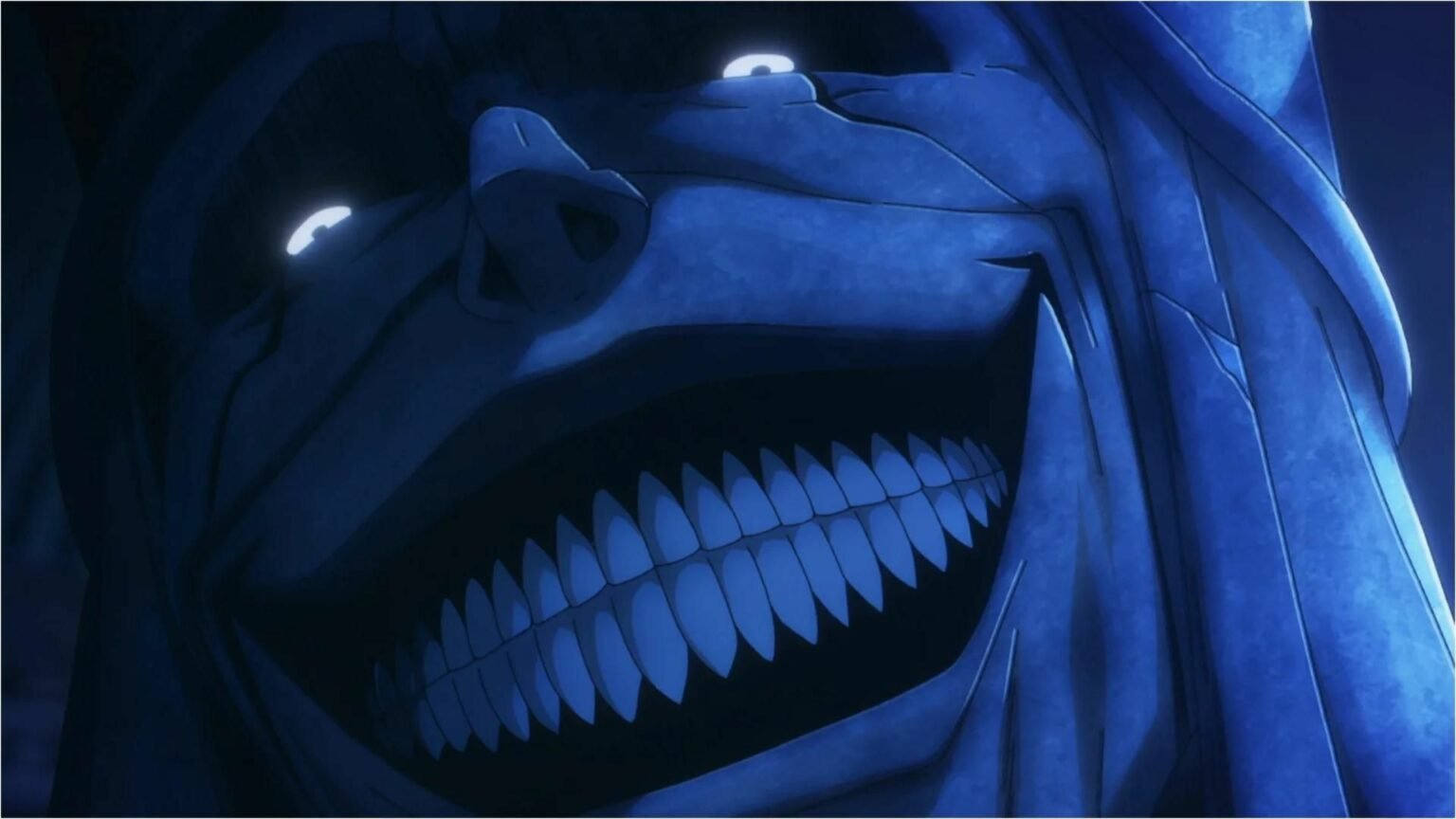

The chilling grin of the Statue of God in the opening chapters of Solo Leveling stands as one of the most recognizable and disturbing sights in contemporary dark fantasy animation. What begins as a localized tragedy in a D-rank dungeon serves as the narrative catalyst for the entire series. Although casual anime fans recognize the entity as a terrifying, high-powered obstacle, the light novels and sequel series reveal that this stone titan is actually a highly calculated piece of cosmic machinery.
Peeling back the layers of this design reveals its connection to the absolute creator of the universe, the tragic betrayal of the entity who built it, and the hidden mechanics of the leveling system, even if you like Baruka.
The Cartenon Temple Rules and Ritual Trials
Officially designated as the Statue of God, the Smiling Statue is the primary threat of the introductory Double Dungeon Arc. It sits on a massive throne at the absolute center of the Cartenon Temple, a hidden chamber discovered deep within a standard D-rank gate raid. The entity acts as an executioner for any raid party members who fail to adhere to the strict, ritualistic guidelines carved onto a stone tablet held by a neighboring angelic statue.
Hunters entering the hidden double dungeon must navigate three lethal trials of faith to survive the encounter.
| Commandment Name | Ritual Requirement | Fail Penalty | Protective Mechanism |
|---|---|---|---|
| Worship the Lord | Bow down and keep the head touching the floor in front of the throne | Super-heated eye beams vaporize the target in milliseconds | None. Compliance is mandatory for all hunters in the chamber |
| Praise the Lord | Stand near stone statues holding musical instruments | Statues wielding weapons bisect or crush the offender | Instrumental statues play music, neutralizing the giant statue |
| Prove Your Faith | Step onto the central altar, lighting a ring of blue flames, and stand ground | Stone knights close in and slaughter anyone fleeing the altar | If at least one hunter remains on the altar, the dungeon doors open |
Physical Dimensions and Combat Durability
In terms of scale, the Statue of God is designed on a monumental scale. The light novel explicitly compares its sitting posture to the Statue of Liberty, placing its total vertical height at a minimum of 93 meters.
The entity is classified within the Demon threat index, showcasing physical parameters categorized at a Town level tier of destructiveness and durability. These combat parameters shape the hazard level of the dungeon:
- Attack Potency: At least Town level. The shockwaves generated by the footfalls of the titan fracture the foundation of a subterranean chamber larger than several Olympic stadiums combined. Its super-heated eye beams can melt high-tier defensive gear and vaporize hunters instantly.
- Durability: At least Town level. During the high-level rematch, consecutive physical attacks from Sung Jin-Woo using the Demon King’s Shortswords produced only minimal scratches on its stone hide.
- Speed: At least Supersonic. Despite its massive size, the entity can pivot and strike with reaction speeds that catch seasoned S-rank hunters off guard.
Deciphering the Psychology of the Sadistic Smile
Analyzing these two entities reveals a distinct contrast in psychological horror and visual design.
| Character Entity | Source Series | Psychological Intent | Facial Expression Mechanics | Visual Lighting Setup |
|---|---|---|---|---|
| Statue of God | Solo Leveling | Sadistic and calculating intelligence | Dynamic transformation from blank stone to wide grin | Extreme bottom-lit high-contrast horror lighting |
| Smiling Titan | Attack on Titan | Mindless and unconscious instinct | Structurally locked muscular position | Flat and ambient naturalistic lighting |
The terror of the titan’s smile lies in its complete absence of consciousness. It is an unthinking beast that smiles because its facial muscles are structurally locked. It feels no malice or joy toward its victims; they are simply food.
Conversely, the Statue of God’s smile is horrifying because it radiates a calculating, sadistic intelligence. The transformation from a blank, solemn stone face to an unnaturally wide, toothy grin subverts expectations of safety. The statue knows exactly what it is doing, views the human invaders as insignificant toys, and derives active pleasure from watching them struggle.
This psychological distress is amplified by the uncanny valley effect. The mouth stretches beyond human anatomical limits, exposing between 40 and 50 pristine, white teeth contrasted against deep, bottom-lit facial shadows. This mimics classic horror film lighting, casting shadows into the eye sockets while highlighting the tiny, glowing red pupils.
Cosmic Origins: Flawless Portrayal of the Absolute Being
The Statue of God is not an actual deity, but rather a flawless stone portrait of the Absolute Being, the supreme creator of the universe.
In the primordial era, the Absolute Being split cosmic light and darkness to forge the Rulers and the Monarchs. However, this supreme creator was not a benevolent god; he was an uncaring, detached entity who viewed the endless war between light and dark purely as a source of personal amusement. This makes the statue’s terrifying smile a thematic reflection of the creator’s true nature: a cruel god who watches his creations slaughter one another with absolute delight.
Kandiaru’s Blueprint and the Genesis of the System
The double dungeon was built by Kandiaru, an ancient sorcerer known as the Architect. Kandiaru was a member of the Demonic Spectre race, a powerful species of shamans and mages who served Yogumunt, the Monarch of Transfiguration, within the Chaos World.
Hoping to secure true immortality, Kandiaru struck a deal with Ashborn, the original Shadow Monarch. Ashborn possessed a power so vast that no normal human could survive hosting it directly without their body breaking under the strain. Kandiaru offered to design a game-like training program, the System, to gradually prepare a human vessel to inherit the Shadow Monarch’s power. In return, Ashborn promised to grant the Architect an immortal body.
To construct the leveling mechanism of the System, Kandiaru used magic to alter the laws of the world. He utilized a portion of the soul of Baran, the Demon Monarch, who had been slain by Ashborn during the first celestial war. This design allowed the chosen human to grow stronger by absorbing the mana and souls of defeated enemies, directly mimicking the natural abilities of the demon race to grow stronger by consuming souls.
Succession over Possession: The Ultimate Betrayal
The original agreement between Ashborn and the Architect was that the chosen human, Sung Jin-Woo, would serve as a physical vessel. Once Jin-Woo’s body was sufficiently leveled and conditioned, Ashborn’s consciousness would descend, erasing Jin-Woo’s ego and taking complete control of his body.
However, Ashborn secretly changed the plan. Witnessing Jin-Woo’s relentless will to live and his repeated triumphs over death, the Shadow Monarch chose him as his true successor rather than a mere puppet.
When Jin-Woo reached Level 100, the System automatically recalled him to the Cartenon Temple for the final stage of succession. As Kandiaru prepared to facilitate Ashborn’s descent, Ashborn betrayed him. He locked the Architect out of the administrative controls, granted Jin-Woo the Black Heart, and transferred his full divinity to the young hunter. This left a furious, powerless Kandiaru to be defeated by Jin-Woo, ending the Architect’s life for good.
Great Spellcaster Kandiaru’s Blessing
The narrative foreshadowed the Architect’s close relationship with Sung Jin-Woo’s growth from the absolute beginning of the series. Upon surviving the Double Dungeon trial in the opening episodes, Jin-Woo was granted a passive skill titled Great Spellcaster Kandiaru’s Blessing.
The physiological properties of this divine enchantment are categorized by both immediate and permanent biological modifiers.
| Blessing Modifier | Biological Function | Narrative Impact |
|---|---|---|
| The Will to Recover | Restores damaged or severed limbs immediately | Healed the arm and leg Jin-Woo lost during the initial temple massacre |
| Longevity | Grants permanent immunity to all diseases, poisons, and abnormalities | Neutralized Kasaka’s venom and the ultimate poison of Querehsha |
| Overdrive Regeneration | Sends healing into overdrive during sleep | Rapidly repairs critical physical trauma overnight |
| Detoxification | Purifies any foreign toxic substances in the bloodstream | Automatically neutralizes alcohol, preventing Jin-Woo from getting drunk |
Behind the Scenes: A-1 Pictures’ Animation Engineering
The terrifying transformation of the Statue of God’s smile represents a major milestone in modern animation production. Under the leadership of director Shunsuke Nakashige and scriptwriter Noboru Kimura, studio A-1 Pictures began production on the series in 2021.
To bring the gargantuan stone temple and its central monster to life, the studio assembled an elite creative team :
- Takafumi Torii (Key Animator): Torii was the primary artist responsible for the visual design of the Statue of God in the anime, hand-drawing the detailed promotional artwork and key frames for the face’s unnaturally fluid transformation from flat stone to an expressive, sadistic grin.
- Yoshihiro Kanno (Action Animation Director): Kanno directed the high-speed kinetic choreography of the double dungeon escape. To capture the sheer size and weight of the stone entity, Kanno balanced traditional hand-drawn frames with modern 3D CGI.
- Sony’s Mocapi Motion-Capture Technology: Animation Producer Atsushi Kaneko revealed that the team used Sony’s experimental mocapi motion-capture prototype technology during production. While central characters like Jin-Woo and the immediate face of the Statue of God were hand-drawn to preserve artistic detail, the complex movements of the surrounding stone knights and background crowd shots were driven by mocapi 3D data. This allowed A-1 Pictures to maintain a remarkably high frame rate for the action sequences without overworking the animation staff.
These demanding visual standards explain the lengthy production schedules of the franchise. Sota Furuhashi and Atsushi Kaneko confirmed that a single standard episode of Solo Leveling requires 10 to 12 months of active production time, with translation and localization taking an additional 2 to 3 weeks per episode to ensure a near-simultaneous global release.
Chronology and Adaptational Timelines
The presentation of the Double Dungeon and the return of the Statue of God spans multiple media formats, with structural pacing adjustments made across the light novel, webtoon, and anime adaptations.
The journey through the double dungeon and the subsequent return to the Cartenon Temple spans multiple distinct story arcs.
| Story Arc | Manhwa Chapters | Novel Chapters | Anime Episodes | Original Release Windows |
|---|---|---|---|---|
| D-Rank Double Dungeon Arc | Chapters 1-10 | Chapters 1-12 | Season 1, Episodes 1-2 | January 2024 |
| Reawakening Arc | Chapters 11-12 | Chapters 8-12 | Season 1, Episode 3 | January 2024 |
| Job Change Arc | Chapters 38-45 | Chapters 46-55 | Season 1, Episodes 11-12 | March 2024 |
| Jeju Island Arc | Chapters 90-107 | Chapters 111-122 | Season 2, Episodes 11-13 | March 2025 |
| Return to Double Dungeon Arc | Chapters 123-131 | Chapters 150-164 | Season 3 | Expected 2026 or 2027 |
While Season 2: Arise from the Shadow concluded on March 30, 2025, with the emotional climax of the Jeju Island Arc, the anime-only audience has yet to see the return to the Cartenon Temple. The highly anticipated showdown with the Architect is set to serve as the narrative center of Season 3, where Sung Jin-Woo, having crossed the Level 100 threshold, returns to face the Architect in a final test of his strength. For those mapping out other major shonen watch orders, a Jujutsu Kaisen watch order guide is available to streamline chronological character development.
The Statue’s Legacy in Solo Leveling Ragnarok
The legacy of the double dungeon and the Architect’s systems continues to expand in the official sequel series, Solo Leveling: Ragnarok, which centers on Jin-Woo’s son, Sung Suho.
In the sequel, the cosmology of the afterlife and spiritual dimensions is explored in greater detail:
- The Shadow of the World Tree: A vast, universal spiritual network that houses the souls of deceased Monarchs and primordial beings seeking rebirth. Within this realm, the spirits of fallen Monarchs reside in unique, infinite-horizon death realms.
- Kandiaru’s Spiritual Realm: Despite his physical death at the hands of Jin-Woo, the Architect’s spiritual consciousness continues to exist within his own endless death realm inside the Shadow of the World Tree.
Ammut and the Tower of Trials: Suho enters the Pyramid Dungeon, a massive trial facility originally built by Kandiaru during his ancient immortality experiments. The dungeon is overseen by Ammut, a giant Crocor shaman who was once a subject of the Architect’s experiments. Ammut trains Suho in the Iron Body Technique, eventually ascending to become the Monarch of Trials and swearing allegiance to Suho as the heir of the Shadow Monarch.
