





It will not take long in Nivalis Nights to have an inventory filled with nothing but rotten or spoiled food. Unfortunately, the game doesn’t allow us to use the rotten food as an ingredient for the restaurant, or it will tank the restaurant’s review faster than people getting sick. Luckily, the game offers some ways to deal with the pile of rotten food sitting in our inventory.
There is no delete all button that removes all the rotten food instantly; we must use the old-fashioned method to get rid of the rotten food out of the inventory to free up space in Nivalis Nights. In this guide, I will help you deal with the rotten food and help you learn about the spoilage or rotting process and the steps you can take to prevent it in Nivalis Nights.
What to do with the rotten food?
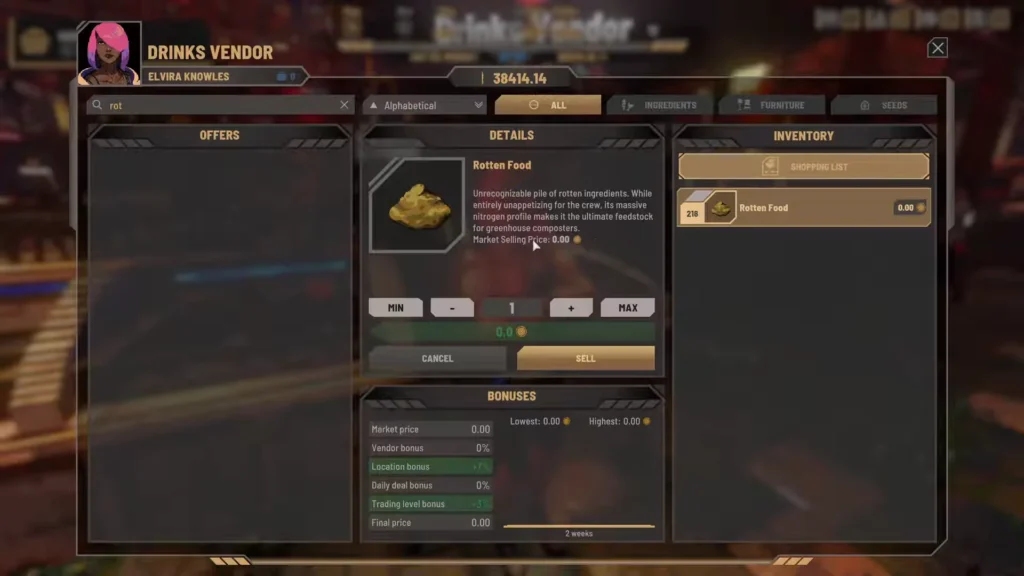
We can either sell the Rotten Food or use it as compost to turn all the Rotten Food into fertilizer for the crops. That’s it; you are basically left with two options: immediately sell or utilize the rotten food to grow crops faster.
- Sell: Head up to any vendor and sell the rotten food, but you are not going to make any money from it. Selling the rotten food basically gets rid of the food from your inventory. If you are looking for a quick disposal, then selling it is the best choice.
- Composter: Talk to the Hardware Vendor and buy a Composter for $1043 (It’s not going to be cheap). Head to the Greenhouse at the Docks and install the Composter. When you add Rotten Food to the Composter, you will get a Fertilizer Bonus; it basically acts as a speed boost to farming. Your crops will not grow 15% faster than before by getting the Fertilizer Bonus.
Selling is the quick way to get rid of the rotten food, as you don’t have to travel to the Greenhouse and Compost to turn all the rotten food into fertilizer; it saves plenty of legwork. On the other hand, if you are growing crops and it is taking longer, then you can use the Composter to deal with the rotten food.
How to Prevent Spoilage or Rotten Food?
Stop making excessive purchases, focus on key ingredients, and manually check the venue inventory are some of the ways you can check for spoilage in the food. You can take many precautions to prevent spoilage of food; here we will take a look at some of them that you can use on a day-to-day basis to stop the food from becoming rotten:
- Check the Freshness of the Food: In some cases, newly bought ingredients will expire right away, and it will always catch you off guard. When you are buying any ingredient, do avoid short-dated stock unless you are planning to use it right away. If an ingredient has a short date, but you are planning to use it later, then the chances are it will become rotten by the time you get around to using it.
- Refrigeration is Temporary: While it is true refrigeration slows down food decay, it doesn’t make the ingredient’s life status permanent. There is a timer attached to each ingredient; going past the limit will always put it into the spoiled category. I will advise here to buy less and always keep an eye out for aging stock.
- Avoid adding more stock: The game will always utilize the newer ingredient stock over the oldest stock. If you keep on adding more, the oldest stock will reach the spoil area. Avoid duplicating the ingredient stacks; add less; don’t try to hoard ingredients.
- Focus on common ingredients: Don’t try to add too many recipes; focus on a few, especially concentrate on the recipes that share a common list of ingredients. It might not be much, but you will save plenty of money on ingredient purchases and also spoilage. Getting too many ingredients to create a variety of dishes is not worth it. You will quickly see your inventory filled with ingredients you don’t need or have too much to do anything other than watch them get spoiled.
- Don’t rely heavily on the Manager: While managers will try to restock the inventory, sometimes they will get an excessive amount or get the wrong ingredients. Even if the manager is at a high level, it doesn’t guarantee reliable purchasing.
- “Longer Ingredient Shelf Life” Mod: If you want to extend the life of food, then we have the Longer Ingredient Shelf Life mod that can add 2x to the permanent shelf life for all the ingredients.
- Don’t get charmed by the lower Item cost: If the restaurant cannot use the ingredient before it spoils, then any smart purchase will be for nothing. Do note, whatever item you decide to purchase, it will also take up storage space. Always buy the necessary ingredients for the dish. Getting them at a lower price makes sense if you are planning to use them later.
Tips for Smart Management
- Do take a look at the venue inventory before making any purchase. The last thing you want to do is to add too much of the same thing.
- Buy the ingredients that go towards a recipe you have in the restaurant. If an ingredient has no near-term value, then don’t bother purchasing it.
- Always focus on the ingredients that are required by the recipes and ignore the rest, even if they are cheap.
- Refrigeration slows down ingredients’ deterioration; it doesn’t keep the freshness forever.
- When you are making a purchase, the only thing you must keep in mind is to buy enough to fill the immediate shortage requirement. Focus on the ingredients that are needed immediately instead of hoarding the ingredients for the future.
- Just because you have larger storage space doesn’t mean you need to fill it with unnecessary ingredients. Many players see space and decide to fill it; I highly advise against making that move.
- Put the ingredients in the correct storage type by reading their item information. Two identical stacks may come with two different expiry dates.
- Always perform a recheck on the older stacks before heading out shopping. This includes the stock in the inventory and venue.
- Either sell or use the rotten food as compost.
